← All projects/Society/No. 46
2022 · Society · Tallinn Architecture Biennale

Tallinn 1.5 — A Plan for a Planetary City

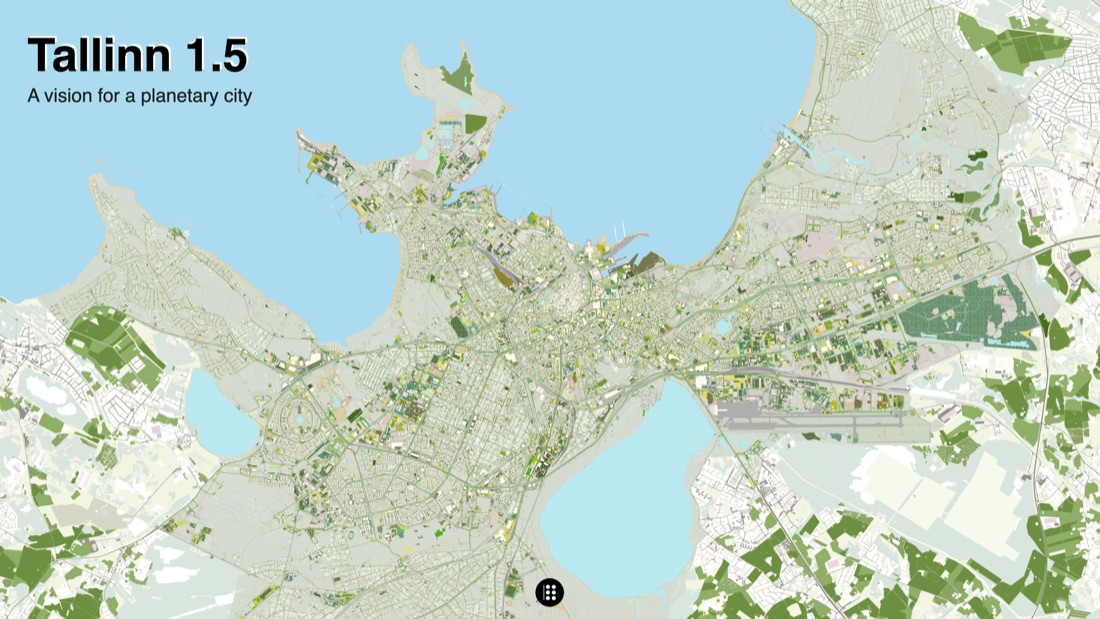
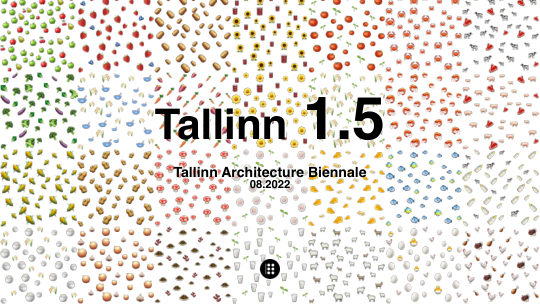
Could Tallinn feed itself? A physical, two-sided lightbox installation for the Tallinn Architecture Biennale answers with hard land-use numbers, not just imagination.
Tallinn 1.5 — A Plan for a Planetary City

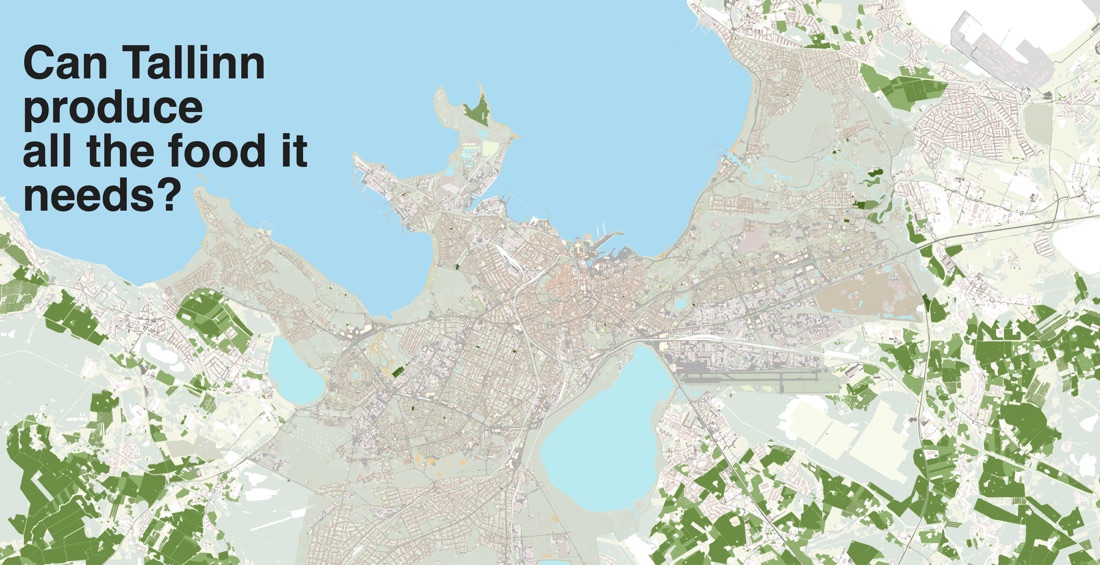
Tallinn Architecture Biennale 2022 took “Edible” as its theme. SPIN Unit’s contribution asked a genuinely testable question: how much of Tallinn’s land would actually need to grow food for the city to feed itself — and what would that city look like?

Commissioned by the Estonian Centre of Architecture as one installation within TAB 2022’s “Edible; Or, The Architecture of Metabolism,” curated by Lydia Kallipoliti and Areti Markopoulou, delivered in partnership with TalTech and with participatory mapping support from Tampere University students.

GIS land-use analysis quantified Tallinn’s current food-production capacity, cross-referenced against a speculative “planetary diet” scenario based on the EAT-Lancet Planetary Health Plate. Participatory mapping documented existing informal food production — community gardens, backyard plots — while a playful carbon/land-efficiency “nutrition label” concept extended the research into a public-communication device.

Delivered as a physical exhibition: large backlit lightbox prints showing “Tallinn Today” on one face and the speculative “Tallinn 1.5” future on the other, displayed at the Museum of Estonian Architecture through autumn 2022.
1 report to download
About the project
ClientTallinn Architecture Biennale
PlaceMuseum of Estonian Architecture, Tallinn, Estonia
Year2022
LensSociety
What we found
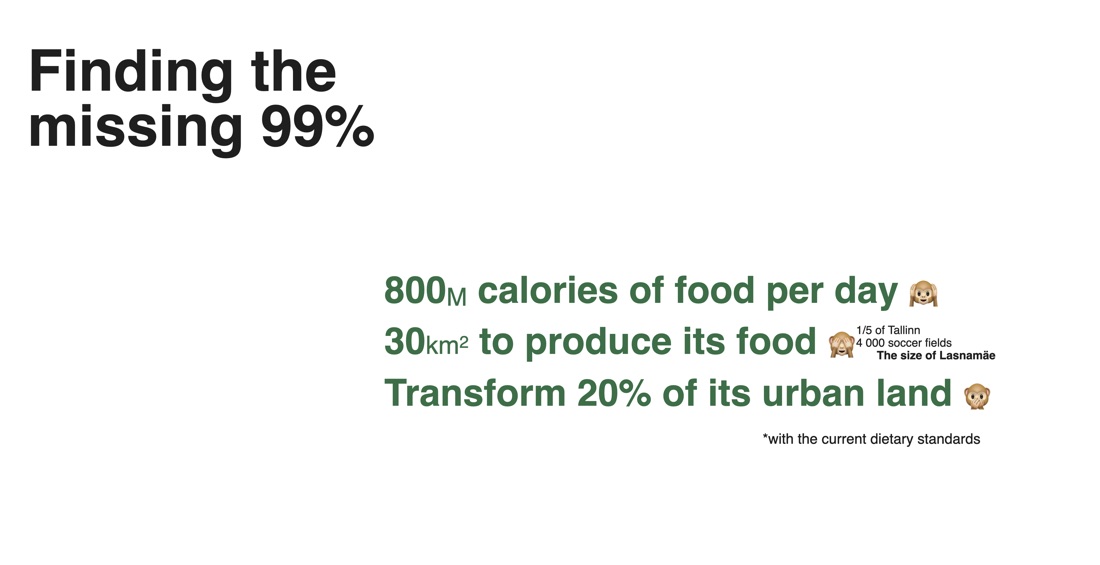
Tallinn currently devotes only about 1% of its land to food production — against roughly 20% (30 km²) that would be needed to feed the city under current diets.
Under the speculative planetary-diet scenario, that land demand falls from 30 km² to 9.5 km² — a 60% reduction achievable by repurposing roads, obsolete industrial land, and parking into productive landscape.
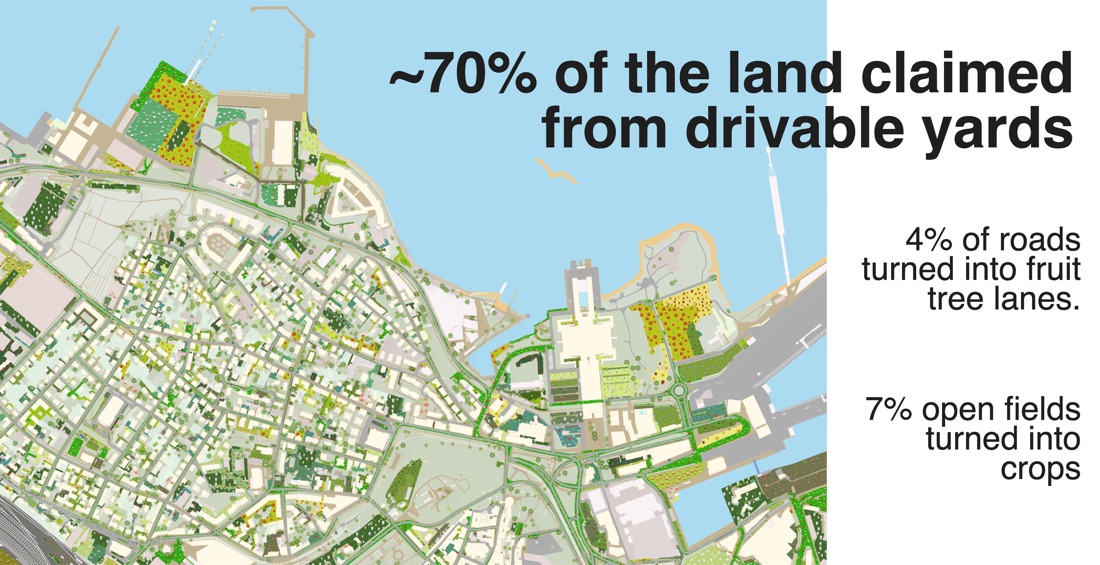
The proposed tactics were deliberately concrete and modest: roughly 4% of roads converted to fruit-tree lanes, about 7% of open fields to crops, streets capped at two lanes — and explicitly avoiding any conversion of existing green or recreational space.
Chose a physical, tangible exhibition format as a deliberate reaction to two pandemic years of digital-only content — bringing research back into a real object people could walk up to.
Pictures

More society projects

All 61 →
Society
Association of Ida-Viru Local Authorities
2022
SPIN Unit · Helsinki — Tallinn
Project record No. 48
Lens:
Society
Reports:
2
Ida-Viru County Shrinking Cities Analysis
SPIN UnitRead the record →
Society
Philipps-Universität Marburg
2022
SPIN Unit · Helsinki — Tallinn
Project record No. 50
Lens:
Society
Reports:
1
RIPA2TAN — Environmental Drivers of Health in the Kilimanjaro Region
SPIN UnitRead the record →
Society
Estonian Ministry of Economic Affairs
2022
SPIN Unit · Helsinki — Tallinn
Project record No. 51
Lens:
Society
Reports:
3
National Study of Shrinking Patterns in Estonia
SPIN UnitRead the record →
Society
City of Tallinn
2024
SPIN Unit · Helsinki — Tallinn
Project record No. 57
Lens:
Society
Reports:
2
Tallinn Service Accessibility Analysis
SPIN UnitRead the record →
Society
Estonian Ministry of Finance
2020
SPIN Unit · Helsinki — Tallinn
Project record No. 34
Lens:
Society
Reports:
3
A Research Pilot for Shrinking Cities
SPIN UnitRead the record →