← All projects/Society/No. 51
2022 · Society · Estonian Ministry of Economic Affairs

National Study of Shrinking Patterns in Estonia

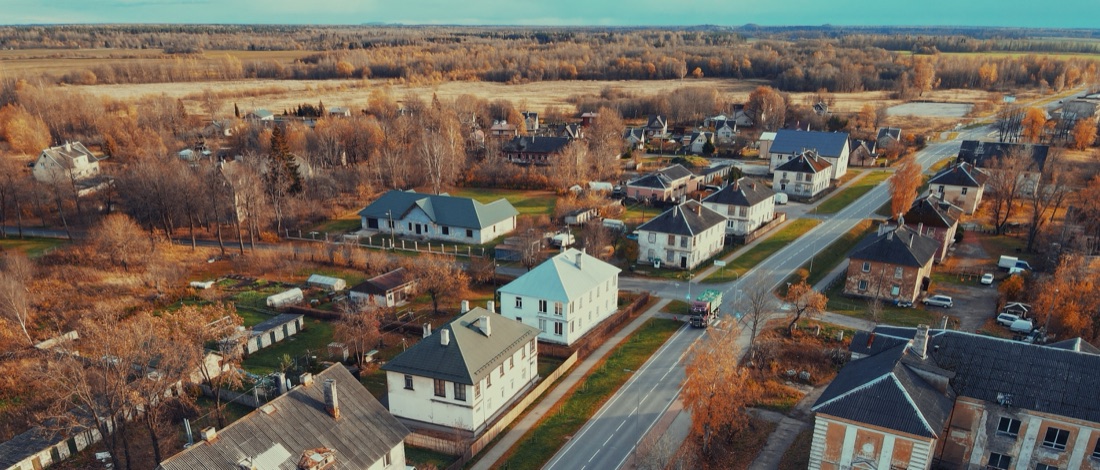
For the first time, Estonia gathered flat-level electricity data nationwide to map building vacancy — revealing that shrinkage isn’t just an East Estonia problem, and that a third of the country’s municipalities have vacancy rates above 15%.
National Study of Shrinking Patterns in Estonia

The 2020 pilot proved electricity consumption data could reliably measure building vacancy in one region. The Ministry of Economic Affairs and Communications wanted to know: does the same picture hold true nationally, and where exactly is Estonia most vulnerable?

Financed by the Ministry of Economic Affairs and Communications in 2021, scaling up the methodology SPIN Unit and TalTech developed during the 2020 pilot. Findings were presented as a keynote at an OECD event.

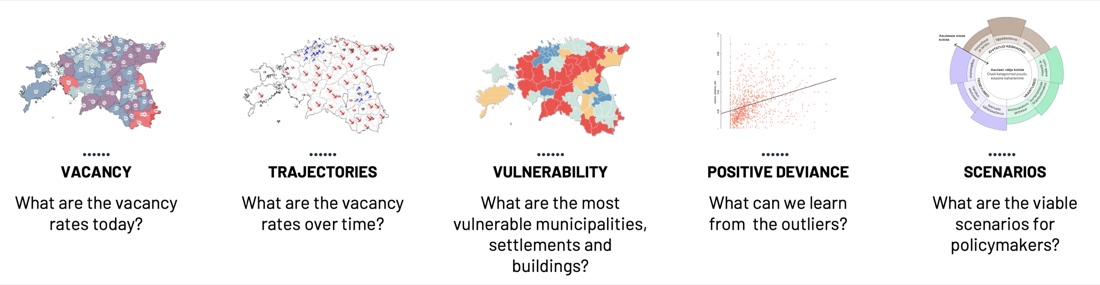
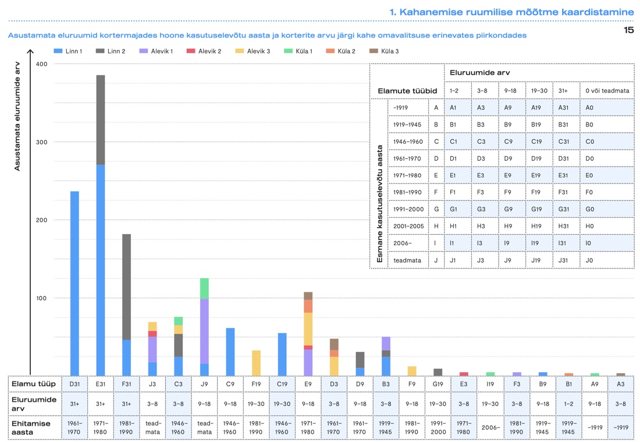
Over seven months, the team worked closely with the Ministry, Statistics Estonia, and the Estonian Data Protection Agency to collect, validate, aggregate, and categorise vacancy data for apartment buildings and single-family houses — the first time this had been done at flat level, nationally. The project leaned heavily on static and interactive cartography to make the resulting data meaningful to policymakers and the joint Ministry of Finance / Ministry of Economic Affairs steering group.

Delivered as a full Estonian report, an English summary, an English presentation, and extensive per-municipality annexes of maps, charts, and tables covering all of Estonia.
1 report to download
About the project
ClientEstonian Ministry of Economic Affairs
PlaceEstonia (national)
Year2022
LensSociety
TopicsData Proxy, National Policy, Shrinking Cities
What we found
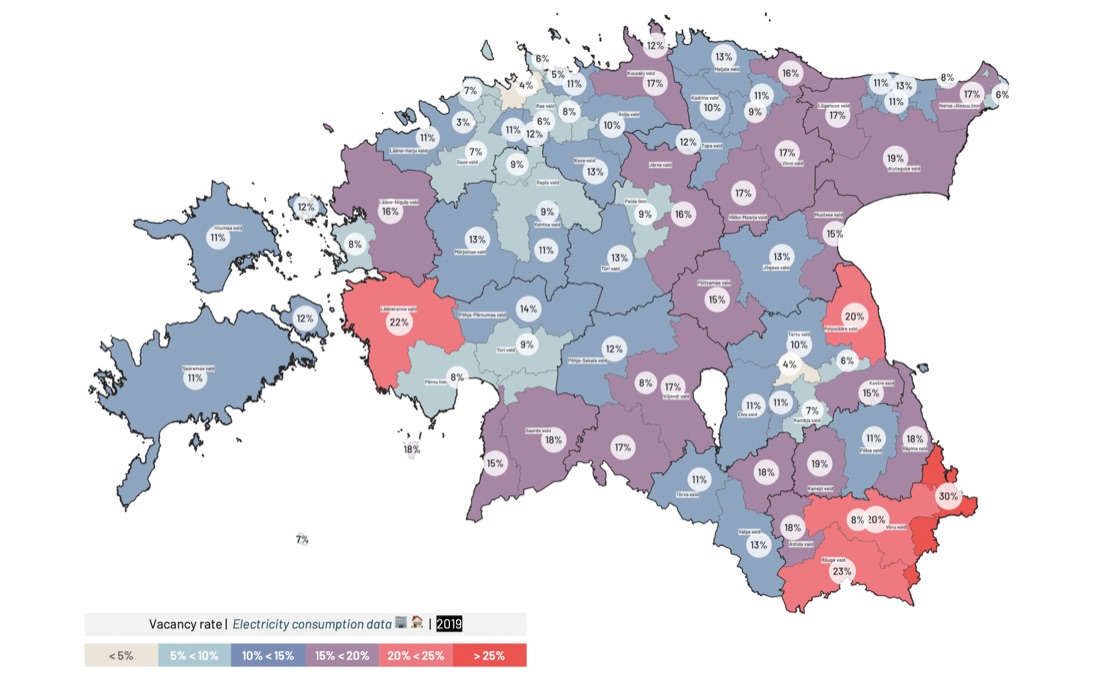
25 municipalities had a vacancy rate of at least 15% in 2019 — meaning roughly one in six dwellings sits empty across about a third of Estonia’s municipalities.
East Estonia is not uniquely affected: the first national vacancy map showed high vacancy is a far more dispersed phenomenon than the earlier regional pilot alone had suggested.
Vacancy differs sharply by housing type — 7% of apartment dwellings vacant nationally, versus 12% of single-family houses.
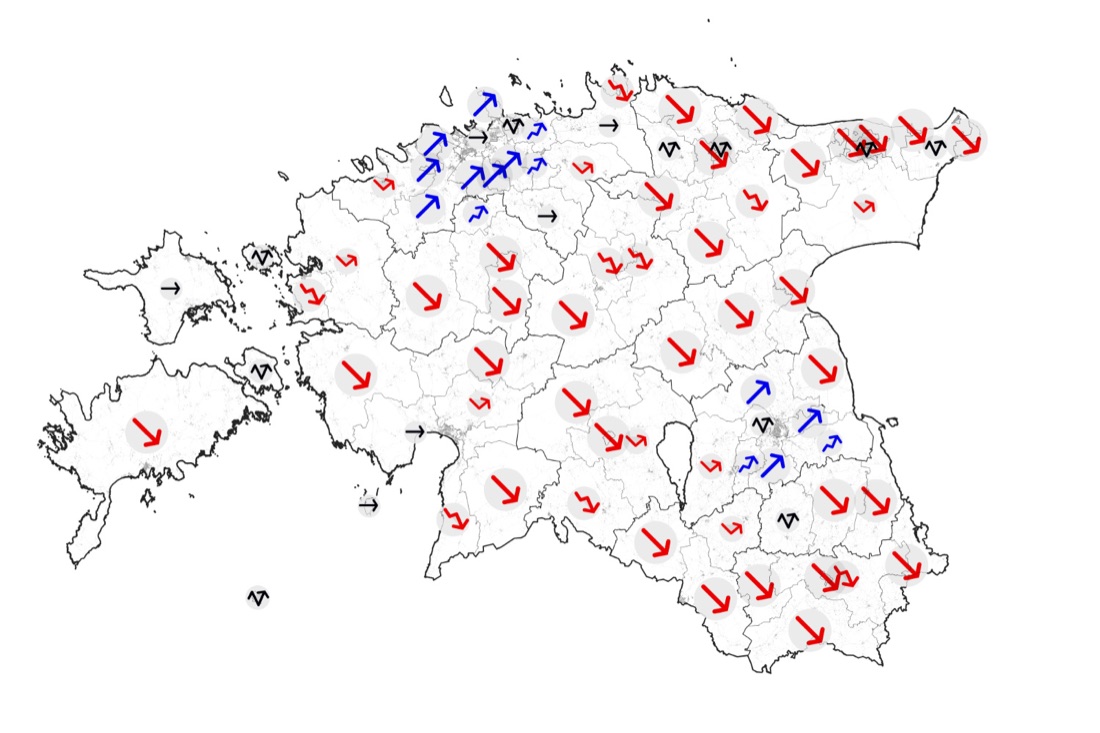
Growth and shrinkage coexist within the same country: 118 small towns are growing while 42 are shrinking, each defined by at least a 5% change in vacancy rate.
Twelve cities were identified as actively shrinking — including Narva, Sillamäe, Kunda, and Tõrva — alongside more than 250 villages with vacancy increases above 15%.
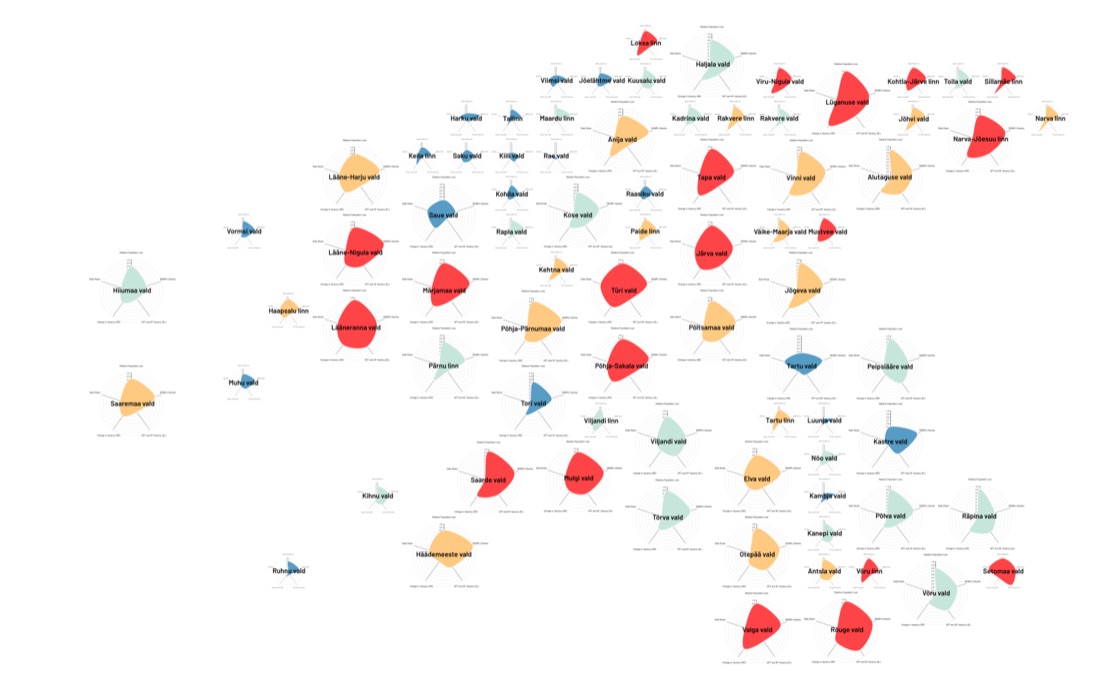
A composite municipal vulnerability index found that the six municipalities used as case studies in the original 2020 pilot actually sat at fairly average positions nationally — a useful check on how misleading current-vacancy-only selection can be.
Pictures

More society projects

All 61 →
Society
Philipps-Universität Marburg
2022
SPIN Unit · Helsinki — Tallinn
Project record No. 50
Lens:
Society
Reports:
1
RIPA2TAN — Environmental Drivers of Health in the Kilimanjaro Region
SPIN UnitRead the record →
Society
Association of Ida-Viru Local Authorities
2022
SPIN Unit · Helsinki — Tallinn
Project record No. 48
No. 48
Lens:
Society
Reports:
—
Ida-Viru County Shrinking Cities Analysis
SPIN UnitRead the record →
Society
Tallinn Architecture Biennale
2022
SPIN Unit · Helsinki — Tallinn
Project record No. 46
Lens:
Society
Reports:
1
Tallinn 1.5 — A Plan for a Planetary City
SPIN UnitRead the record →
Society
City of Tallinn
2024
SPIN Unit · Helsinki — Tallinn
Project record No. 57
Lens:
Society
Reports:
2
Tallinn Service Accessibility Analysis
SPIN UnitRead the record →
Society
Estonian Ministry of Finance
2020
SPIN Unit · Helsinki — Tallinn
Project record No. 34
Lens:
Society
Reports:
3
A Research Pilot for Shrinking Cities
SPIN UnitRead the record →