← All projects/Space/No. 52
2022 · Space · City of Tallinn

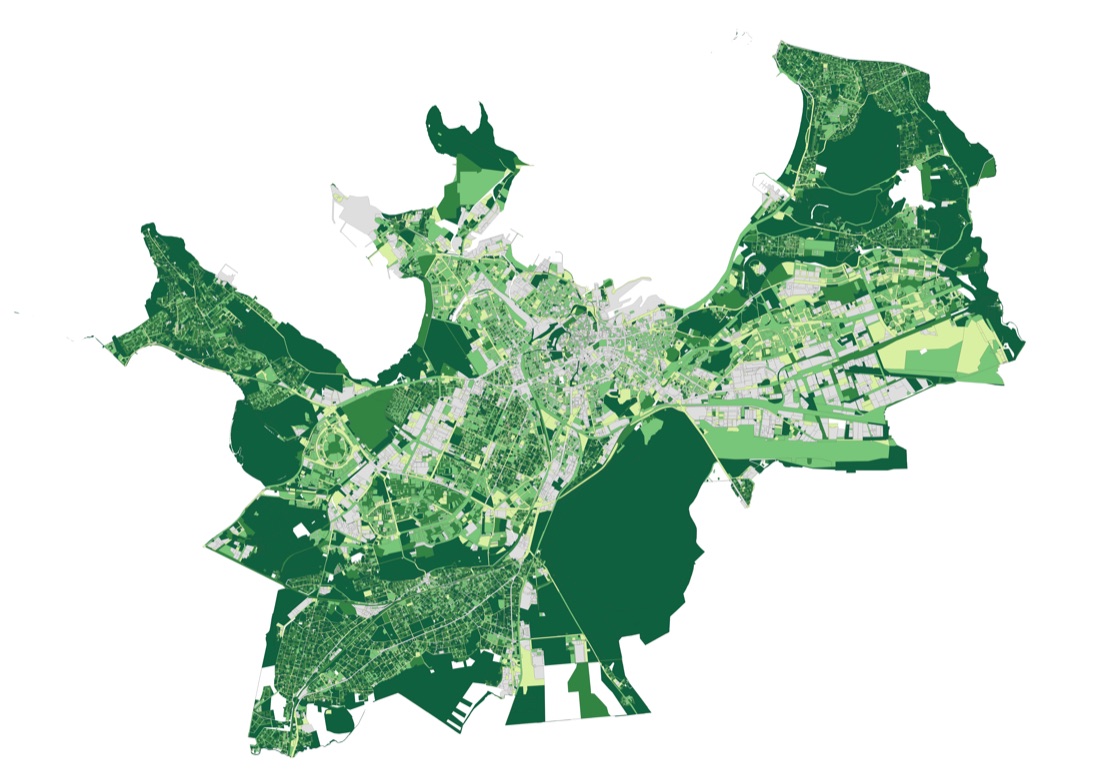
Tallinn Green Factor (Rohefaktor)

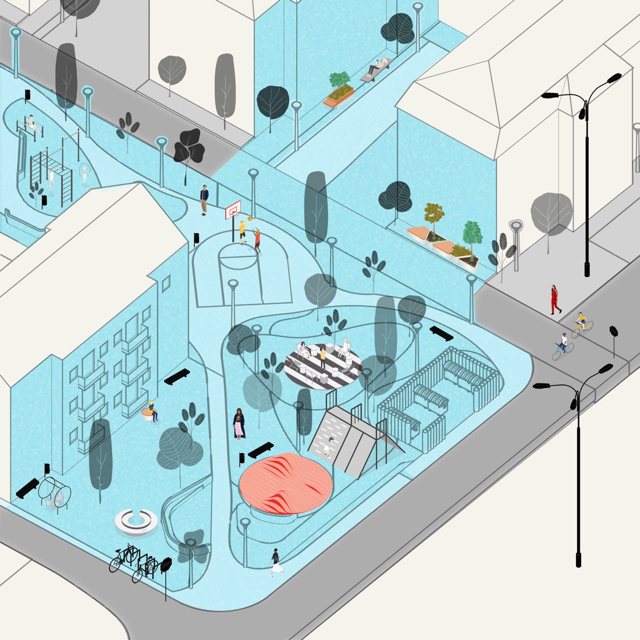
Turning “add some greenery” into a scored, comparable planning requirement — Tallinn’s own version of the green-space scoring tools pioneered by Berlin and adapted since by Helsinki and Stockholm.
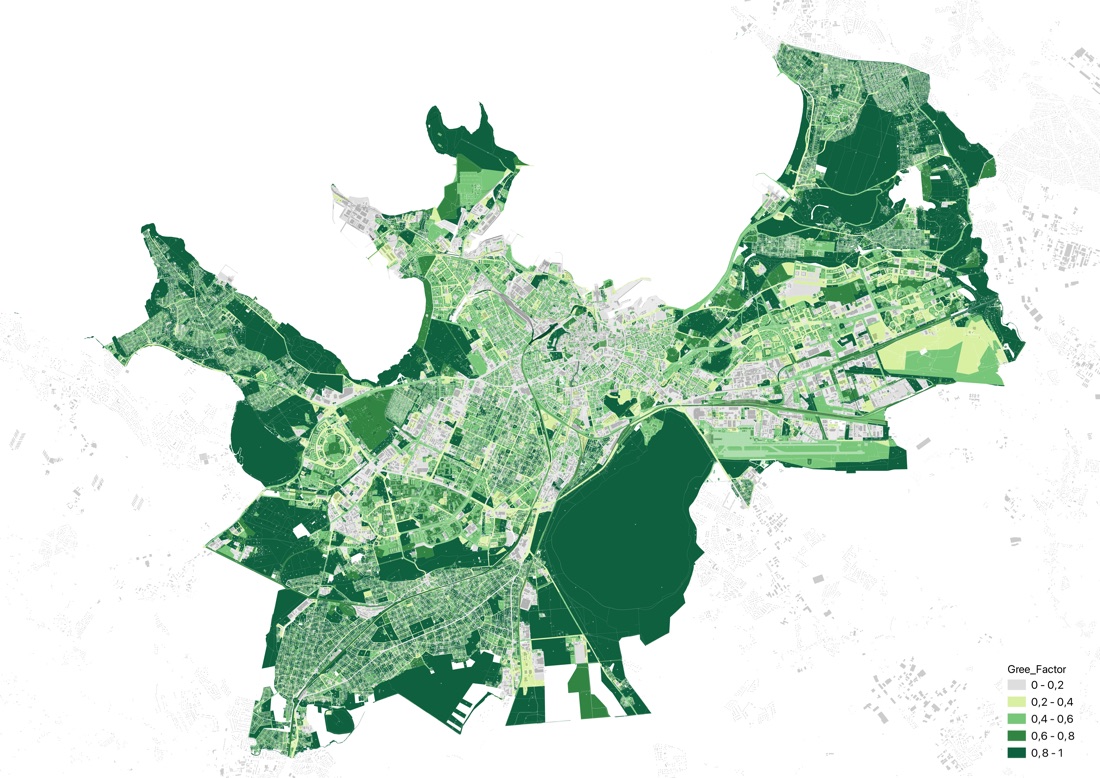
Tallinn Green Factor (Rohefaktor)

Requiring green space in new development is easy to state and hard to enforce consistently — without a shared way to measure it, “green enough” means whatever each planner decides. Tallinn wanted a quantified, comparable tool it could actually apply and check.

Modelled on Berlin’s 1994 Biotopflächenfaktor and its adaptations in Malmö, Oslo, Stockholm, and — most directly — Helsinki’s Viherkerroin, developed with TalTech and overseen by a steering group drawn from across the city’s planning departments over four stages between April and November 2022.

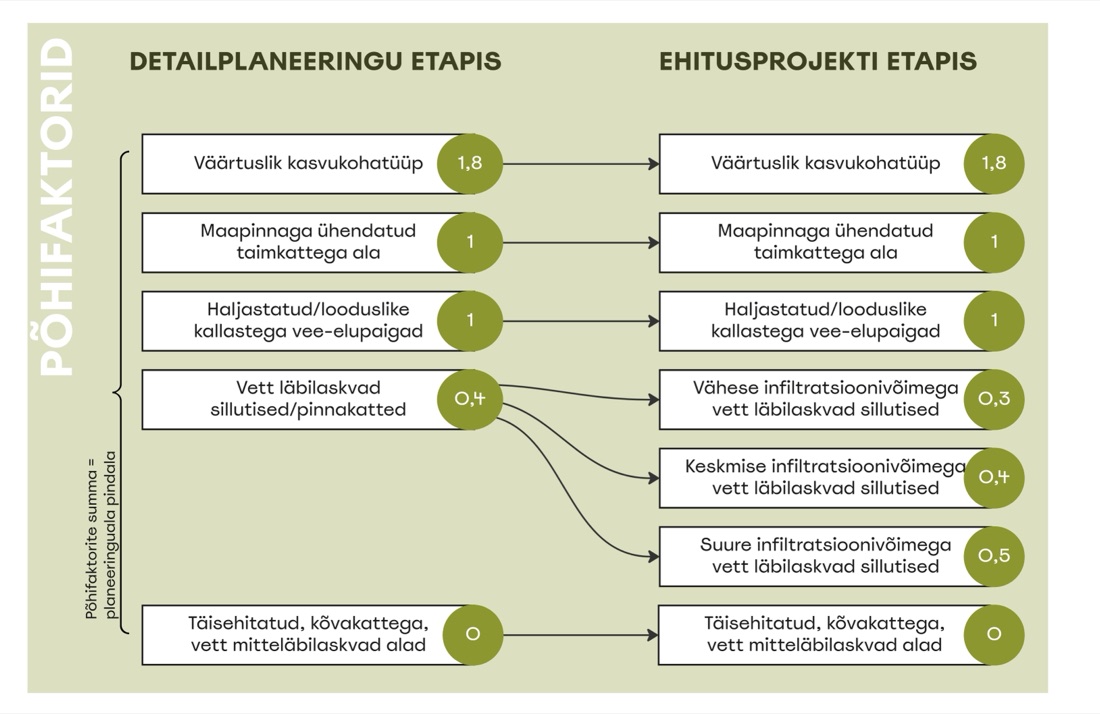
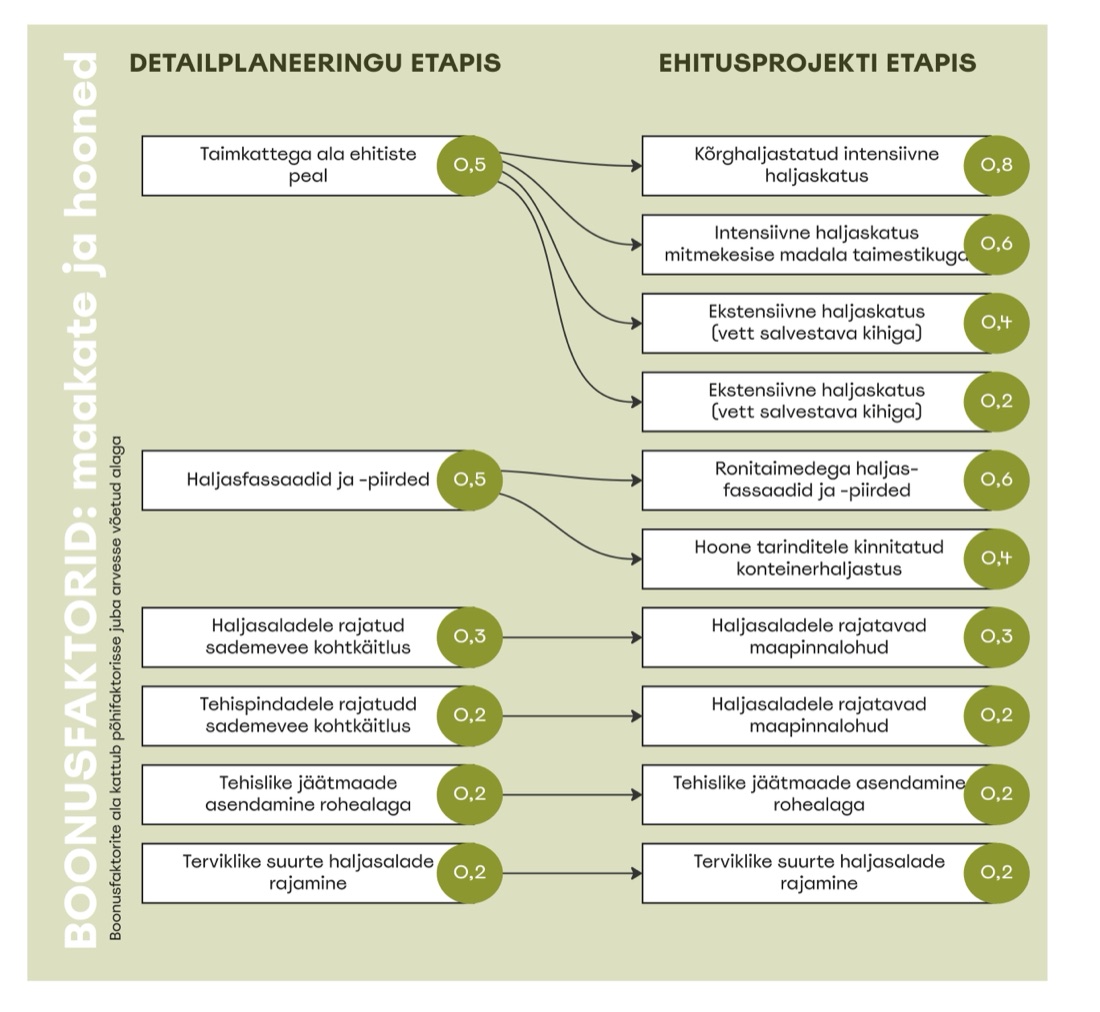
Different land-cover types and green components on a site are weighted by ecological-value coefficients and summed against a required target — five base factors and up to seventeen stackable bonus factors at the design stage. The tool was tested by ten planning and design firms across roughly twenty real detailed plans and building projects across different Tallinn districts before being finalised.

Delivered as a full methodology report, an Excel calculation tool, and appendices covering international comparisons and tester feedback — followed by a dedicated training session for the city in January 2023.
1 report to download
About the project
ClientCity of Tallinn
PlaceTallinn, Estonia
Year2022
LensSpace
TopicsGreen Infrastructure, Planning Tool, Policy Instrument
What we found
Applies at two planning stages — detailed plan and building design — with the design-stage score never allowed to fall below what was proven at the planning stage, even as the specific means of achieving it can change.
Real-world testing surfaced genuine regulatory conflicts the tool has to coexist with: underground parking requirements that push water infiltration out of reach, fire-truck access lanes that can’t be greened, and utility easements restricting tree planting.
Recommends a phased rollout — starting with city-led development areas before extending to all new detailed plans — with roughly a year of live testing before full enforcement.
Explicitly benchmarked against five other cities’ tools, ranging from Berlin, Malmö, and Oslo’s simpler statutory models to Stockholm and Helsinki’s more complex, still-voluntary approaches.
Proposed linking the tool to Tallinn’s TAR spatial-data registry and its parallel “GreenTwins” digital-twin pilot, for automated, ongoing monitoring rather than one-off checks.
Pictures

More space projects

All 61 →
Space
TELT
2023
SPIN Unit · Helsinki — Tallinn
Project record No. 54
Lens:
Space
Reports:
1
SMARTLAND by TELT — Interactive Storymap
SPIN UnitRead the record →
Space
UNDP Kosovo
2023
SPIN Unit · Helsinki — Tallinn
Project record No. 55
Lens:
Space
Reports:
1
Block 1 — Reimagining a Socialist-Era Superblock in Prishtina
SPIN UnitRead the record →
Space
Forum Virium Helsinki
2022
SPIN Unit · Helsinki — Tallinn
Project record No. 47
Lens:
Space
Reports:
2
Experimentation Evaluation Toolkit — Ylä-Malmi Pilot
SPIN UnitRead the record →
Space
Tallinn University of Technology
2026
SPIN Unit · Helsinki — Tallinn
Project record No. 61
Lens:
Space
Reports:
—
EHR Building Registry Data Pipeline — TalTech
SPIN UnitRead the record →
Space
UNDP Armenia
2020
SPIN Unit · Helsinki — Tallinn
Project record No. 39
Lens:
Space
Reports:
1
metaMorphology analysis of Yerevan Circular Park
SPIN UnitRead the record →