← All projects/Space/No. 16
2017 · Space · Strelka KB

The Hidden Life of 38 Cities — World Cup 2018 Heritage

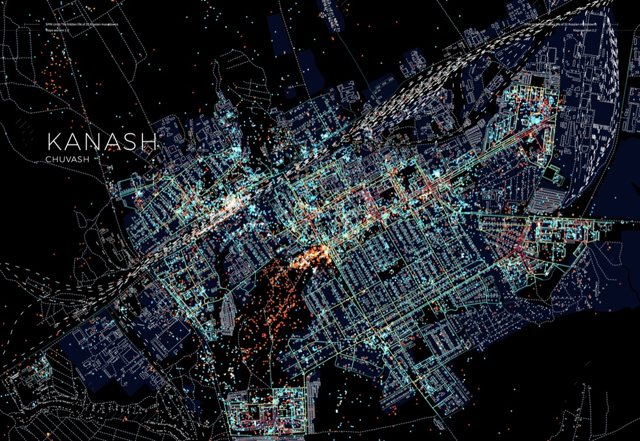
A million-post-scale social media study of public life across 38 Russian cities, commissioned as “World Cup Heritage” analysis ahead of the 2018 tournament — deliberately going far beyond the 11 official host cities.
The Hidden Life of 38 Cities — World Cup 2018 Heritage

Hosting the World Cup brings investment and attention to a handful of cities — but Strelka KB wanted to understand public space and youth activity across a much wider set of Russian regional centres, using the tournament as the occasion rather than the sole focus.

Commissioned as “Metamorphology Russia” (Agreement No. 1702-35a, December 2016), scoped as legacy/urban-impact analysis to identify high-value, high-youth-activity public spaces at both city and individual-space scale — deliberately covering 38 cities across three population tiers, not just the 11 official 2018 World Cup hosts.

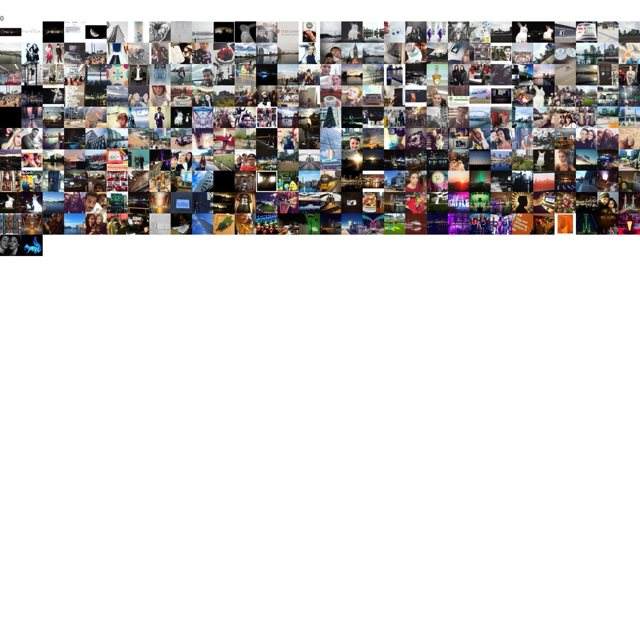
Roughly 2.5–3 million geolocated social media posts were collected across the 38 cities; a sample of 3–10% per city was tagged (by subject, feeling, youth, gender, activity, monument type, indoor/outdoor) both manually and via machine-learning scene classification, cross-validated against each other. Hourly activity curves for leisure, social, and youth-tagged content, corrected for each city’s time zone, mapped the daily rhythm of public life.

Delivered as a seven-part large-format map atlas plus per-city analytical dashboards for all 38 cities, completed February 2017.
About the project
ClientStrelka KB
Place38 Russian cities, national scope
Year2017
LensSpace
TopicsComputer Vision, National Scale, Social Media Data, Sports Legacy
What we found
Youth dominate public-space content — teens and kids together outweigh other demographics in tagged imagery, with teens at 61% of youth-tagged content.
Public space reads as safe far more than unsafe: 61% neutral, 33% enjoyable, only 7% unsafe sentiment in tagged content, aggregated across all 38 cities.
Leisure and social activity dominate (roughly 42% and 31% respectively in the sample city), far outweighing civic, mobility, or income-related content.
A consistent daily rhythm emerged everywhere — activity troughs in early morning, rising steadily to peak near midnight.
Historic and contemporary monuments are almost evenly represented in citizens’ own photography — heritage isn’t crowding out newer civic architecture in how people document their cities.

More space projects

All 61 →
Space
Strelka KB
2017
SPIN Unit · Helsinki — Tallinn
Project record No. 17
Lens:
Space
Reports:
1
The Hidden Life of 32 Russian Monotowns
SPIN UnitRead the record →
Space
University of Salford
2017
SPIN Unit · Helsinki — Tallinn
Project record No. 15
Lens:
Space
Reports:
1
MediaCityUK Activity Analysis
SPIN UnitRead the record →
Space
Princeton University
2016
SPIN Unit · Helsinki — Tallinn
Project record No. 12
Lens:
Space
Reports:
1
Rio de Janeiro Olympic Urbanism Maps
SPIN UnitRead the record →
Space
Turku Urban Research Programme
2015
SPIN Unit · Helsinki — Tallinn
Project record No. 11
Lens:
Space
Reports:
1
A Sense of Place
SPIN UnitRead the record →
Space
City of Turku
2018
SPIN Unit · Helsinki — Tallinn
Project record No. 22
Lens:
Space
Reports:
2
Turku Open Platform (TOP)
SPIN UnitRead the record →