← All projects/Society/No. 24
2019 · Society · Demos Helsinki

New Futurama

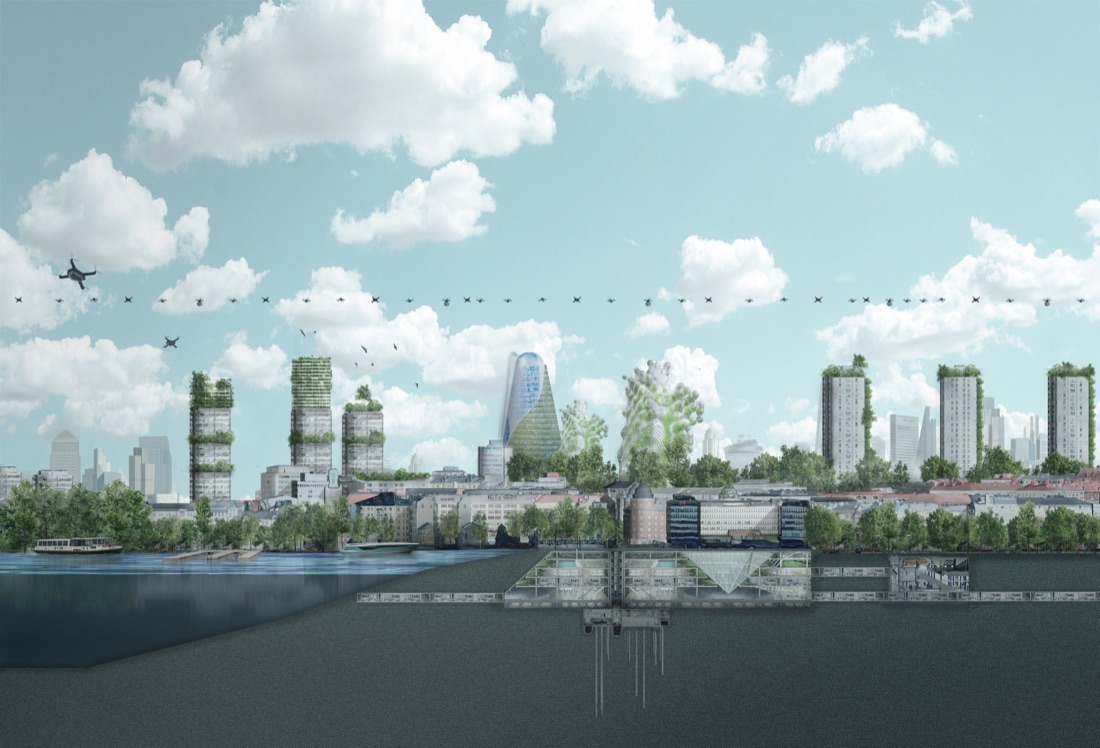
A speculative 2035 vision reframing the 1939 World’s Fair “Futurama” — not a car-centric future, but a climate response built around mobility, vertical green infrastructure, and a city that’s never finished.
New Futurama

The original 1939 “Futurama” exhibit sold the world on car-centric, low-density urbanism — a vision still being replicated today. Demos Helsinki and MaaS Global asked SPIN Unit to imagine what a “New Futurama” would look like if it started from climate response instead.

Developed as a thought-leadership and business-development project for MaaS Global (the company behind the Whim mobility app), with a staged plan to build a consortium of funding partners and explore a physical/mixed-reality exhibition — including early-stage discussions about a possible installation at Dubai Expo 2020.

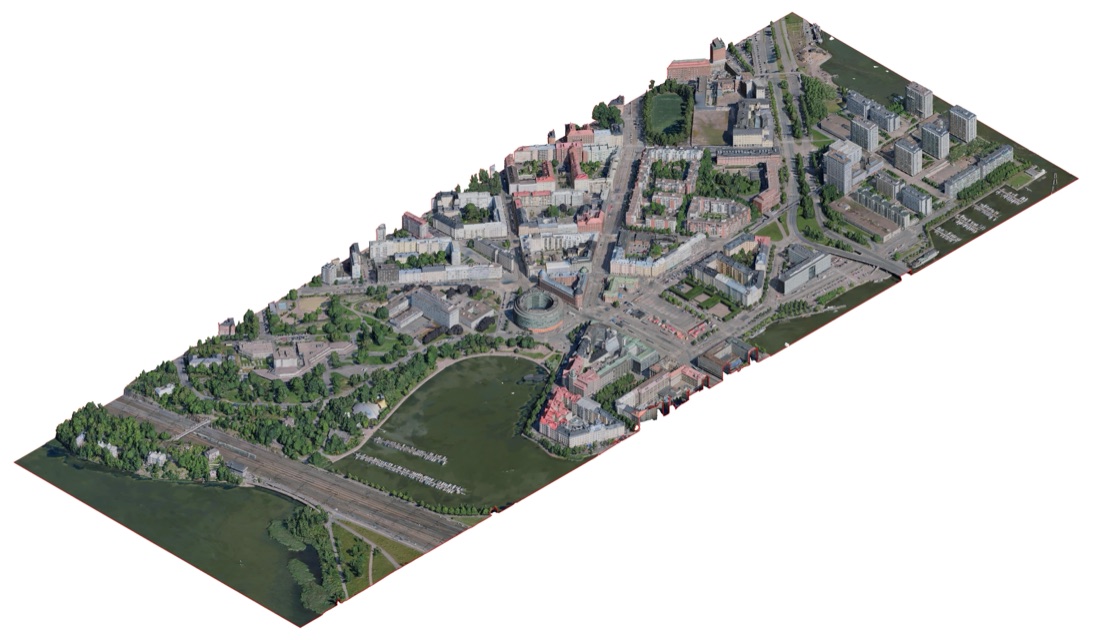
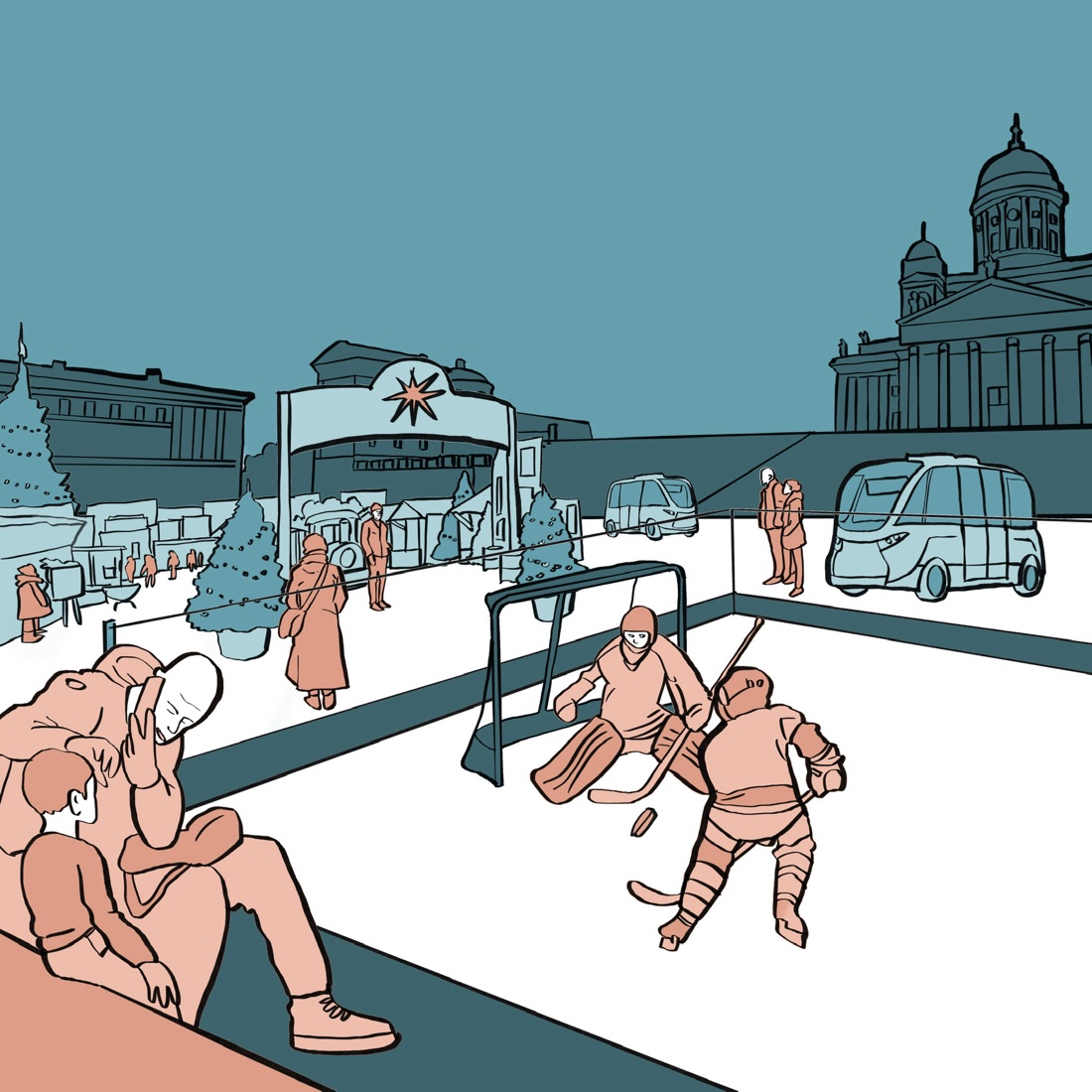
Built around four themes — Retrofit (upgrade the existing city rather than build new), Vertical (push new infrastructure into vertical and aerial space, freeing land for nature), Multilocal (mobility becomes the central driver of urban design), and Beta Space (a city that’s never finished, run more like a service than a fixed plan). These converge in the “Supernode” concept — illustrated with a real Helsinki case study using LIDAR-based 3D city modelling and photorealistic scenario montages.

Developed through late 2019 into early 2020 as a staged concept deck, with a defined path toward prototype funding and an exhibition-scale installation.
1 report to download
About the project
ClientDemos Helsinki
PlaceHelsinki, Finland (speculative 2035 vision)
Year2019
LensSociety
TopicsDesign Fiction, Futures Thinking, Mobility as a Service
What we found
Mobility accounts for more than 20% of global CO2 emissions and 39% of energy use cited in the brief — framing transport, not buildings, as the primary lever for climate-responsive urban design.
Up to 25% of urban land is parking and up to 75% is infrastructure — space the concept argues could be substantially reclaimed.
Behavioural shift already underway: 70% of millennials favour experience over ownership, and only 9% of 18-year-olds in Stockholm held a driver’s licence in 2018.
Explicitly critiques the ongoing global export of car-dependent, low-density new towns (citing Xiongan New Area near Beijing) as a repeat of Futurama’s original mistake.
The Helsinki “Supernode” case study is a concrete, not just conceptual, proposal — vertical green infrastructure, self-regenerating buildings, and a stacked multimodal “city vault” combining international rail, metro, tram, shared vehicles, and drones.
Pictures

More society projects

All 61 →
Society
Municipality of Sipoo
2019
SPIN Unit · Helsinki — Tallinn
Project record No. 28
Lens:
Society
Reports:
—
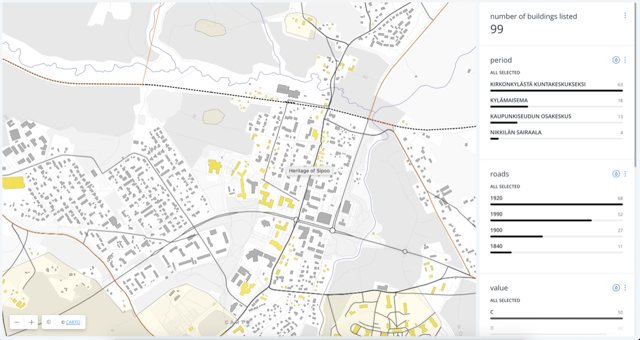
Heritage of Sipoo — Typomorphology Map
SPIN UnitRead the record →
Society
Estonian Ministry of Finance
2020
SPIN Unit · Helsinki — Tallinn
Project record No. 34
Lens:
Society
Reports:
3
A Research Pilot for Shrinking Cities
SPIN UnitRead the record →
Society
karres+brands
2017
SPIN Unit · Helsinki — Tallinn
Project record No. 14
Lens:
Society
Reports:
1
Voorbij de Winkelstraat — Schiedam
SPIN UnitRead the record →
Society
Strelka KB
2016
SPIN Unit · Helsinki — Tallinn
Project record No. 13
Lens:
Society
Reports:
1
Moscow Green & Water Accessibility Analysis
SPIN UnitRead the record →
Society
Tallinn Architecture Biennale
2015
SPIN Unit · Helsinki — Tallinn
Project record No. 9
Lens:
Society
Reports:
—
TAB-Lab — Tallinn Architecture Biennale 2015
SPIN UnitRead the record →