← All projects/Mobility/No. 38
2020 · Mobility · City of Tallinn

metaYLE — Ülemiste Mobility Nudge

As Rail Baltica prepares to double the size of Tallinn’s airport-adjacent business district, this study modelled exactly when its roads and transit would hit capacity — and showed that widening roads would make things worse, not better.
metaYLE — Ülemiste Mobility Nudge

Ülemiste — home to Tallinn Airport, the future Rail Baltica terminal, and the Ülemiste City business district — is expected to roughly double in size as high-speed rail arrives. Before approving further development, the city needed to know: at what point does current road and transit capacity actually run out, and what happens if we invest in the wrong things?

Won through public procurement, jointly financed by the City of Tallinn, Tallinn Airport, and district developer Mainor Ülemiste. Delivered with partners Ramboll Finland and Raul Kalvo/Inphysica, running from a 2019 bid through final delivery in 2021.

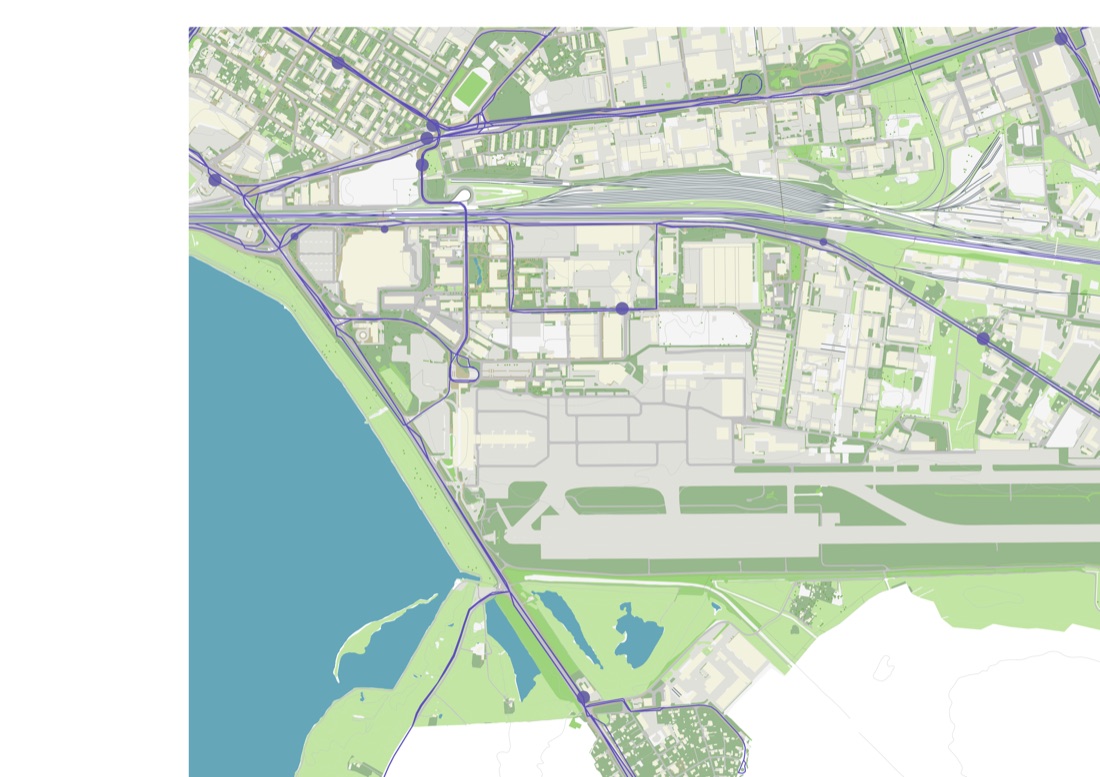
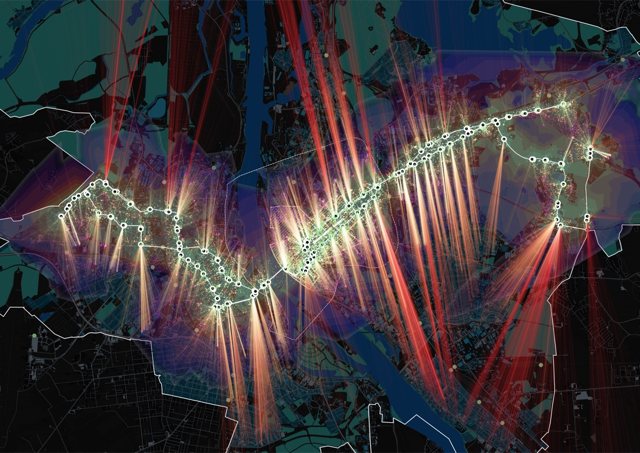
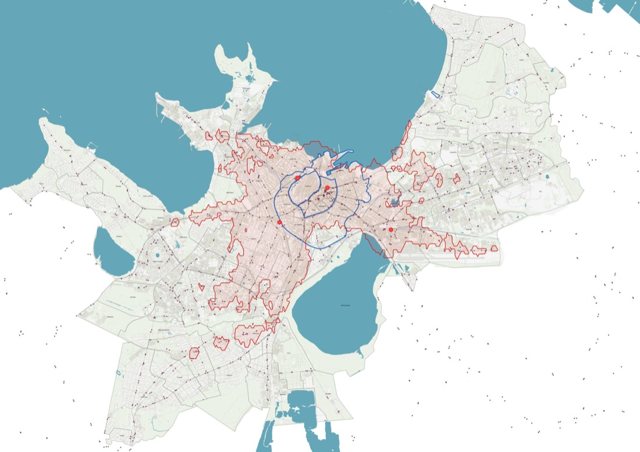
Combined a roughly 800-respondent employee survey on commuting behaviour with traffic counts, tram occupancy data, and mobile positioning data, modelled through agent-based simulation (GAMA) and GIS accessibility analysis. Five growth scenarios were tested — from road-expansion-led to active-mobility-and-transit-priority — each projected forward across multiple development stages.

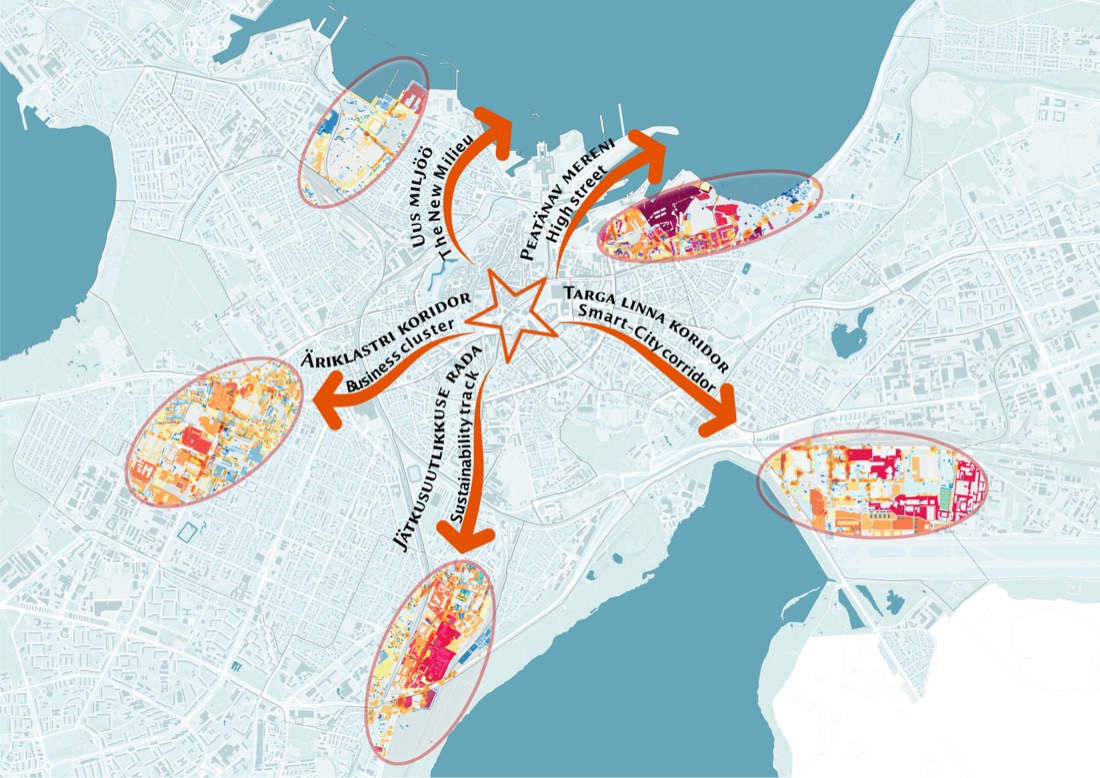
Delivered as a full Estonian report with English executive summary, technical annexes, and a final presentation, alongside a “star plan” spatial concept for five development corridors radiating from Ülemiste.
1 report to download
About the project
ClientCity of Tallinn
PlaceÜlemiste district, Tallinn, Estonia
Year2020
LensMobility
TopicsAgent-Based Modelling, Mobility, Public Procurement, Scenario Planning
What we found
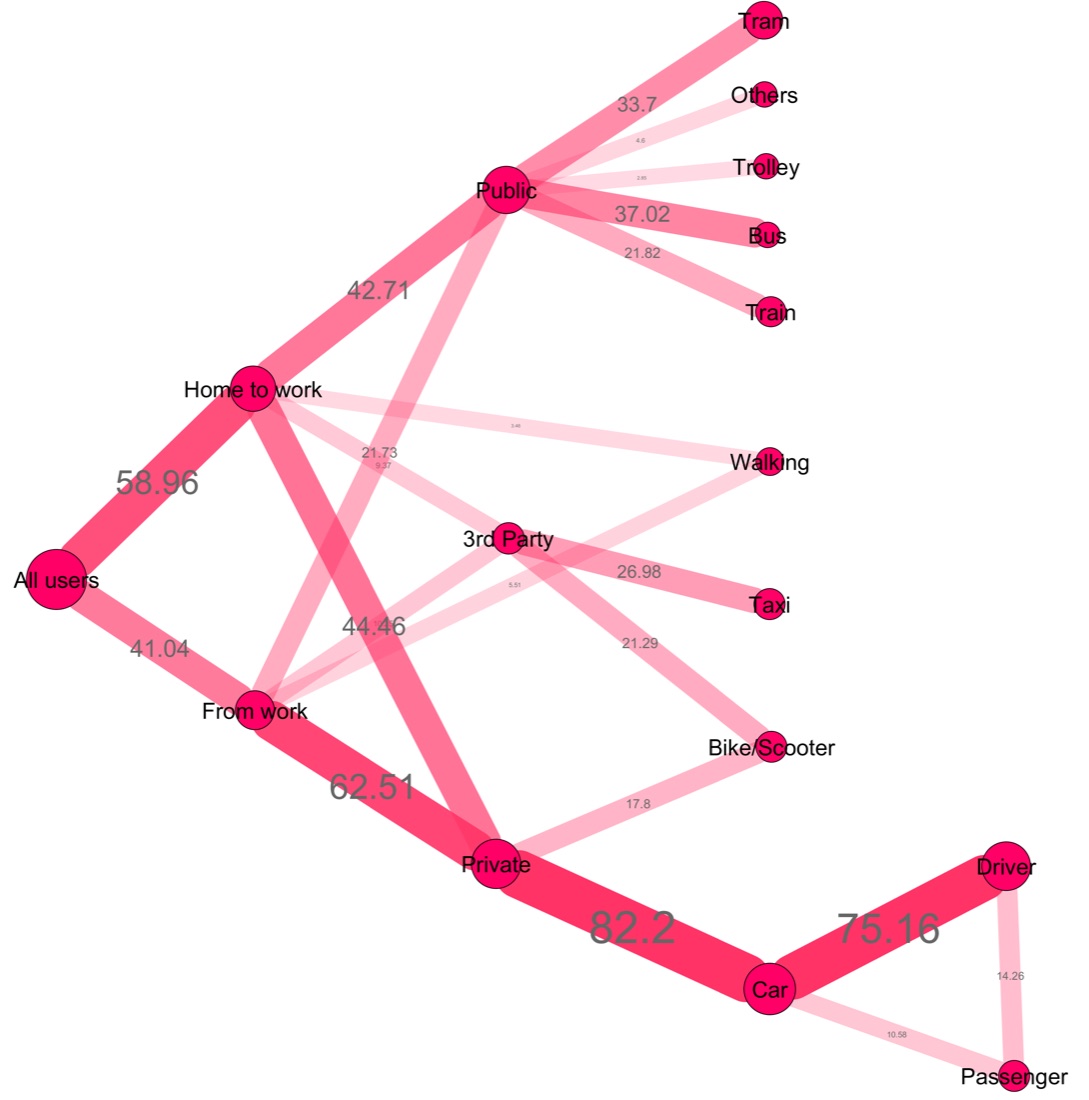
73% of airport passengers currently arrive by car — despite Tallinn’s overall modal split being relatively balanced, the wider region driving into Ülemiste is heavily car-dependent.
95% of current drivers said they’d switch mobility mode if conditions improved — a striking latent demand for better transit and cycling infrastructure, from an 800-person employee survey.
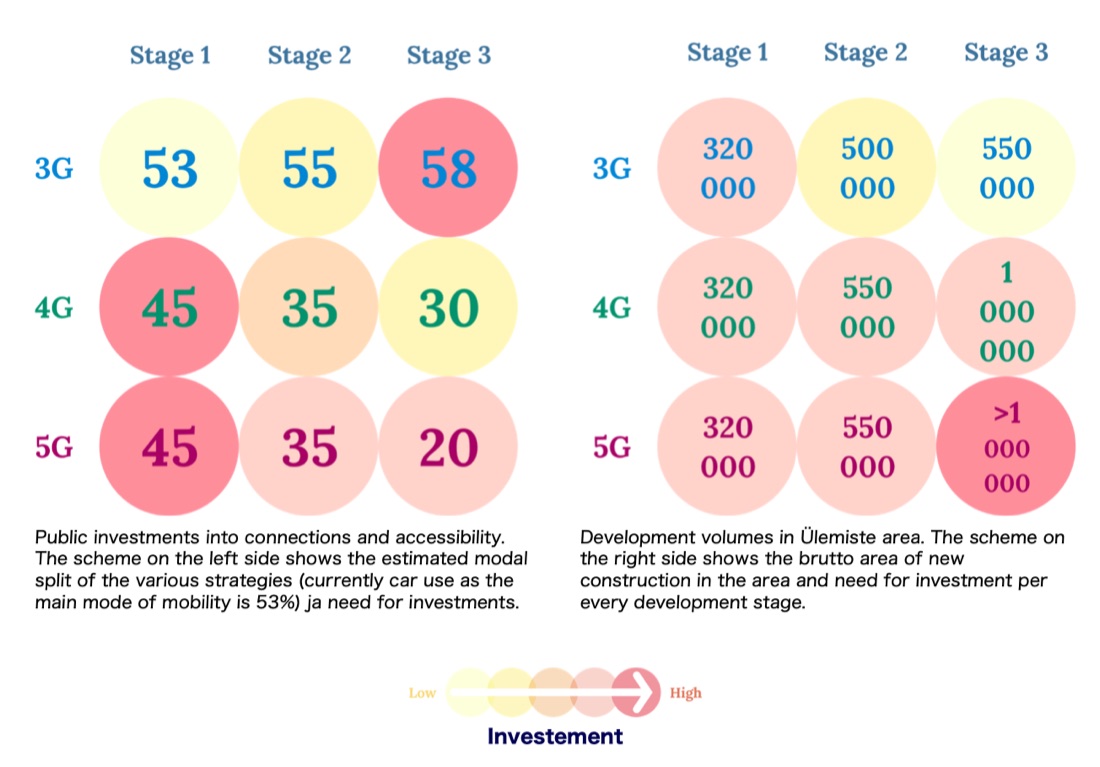
Road-widening scenarios were projected to increase car mode share, not reduce it — from 53% to 58% under a road-expansion scenario, due to induced demand — versus falling to 20–30% under transit- and active-mobility-priority scenarios.
Both road and tram capacity are already near their limits at peak hours, meaning the choice of what to invest in next directly determines how much new development the district can sustainably absorb.
The incoming Rail Baltica line was flagged as a physical barrier risk — the study explicitly recommends pedestrian underpasses and crossings so the new railway doesn’t cut Ülemiste off from the rest of the city.
Pictures

More mobility projects

All 61 →
Mobility
Fyma
2021
SPIN Unit · Helsinki — Tallinn
Project record No. 41
Lens:
Mobility
Reports:
1
Mobility KPIs for Queen Elizabeth Olympic Park
SPIN UnitRead the record →
Mobility
City of Tallinn
2021
SPIN Unit · Helsinki — Tallinn
Project record No. 42
Lens:
Mobility
Reports:
1
Kiida Peatust / Laida Peatust — Crowdsourced Bus Stop Survey
SPIN UnitRead the record →
Mobility
Association of Municipalities of Harju County
2021
SPIN Unit · Helsinki — Tallinn
Project record No. 43
Lens:
Mobility
Reports:
1
The New Modal — Mobility Equity in Harju County
SPIN UnitRead the record →
Mobility
Demos Helsinki
2020
SPIN Unit · Helsinki — Tallinn
Project record No. 33
Lens:
Mobility
Reports:
—
Riga Mobility Metrics
SPIN UnitRead the record →
Mobility
City of Tallinn
2019
SPIN Unit · Helsinki — Tallinn
Project record No. 30
Lens:
Mobility
Reports:
4
metaPARK — Performance-Based Parking Policy for Tallinn
SPIN UnitRead the record →