← All projects/Mobility/No. 42
2021 · Mobility · City of Tallinn

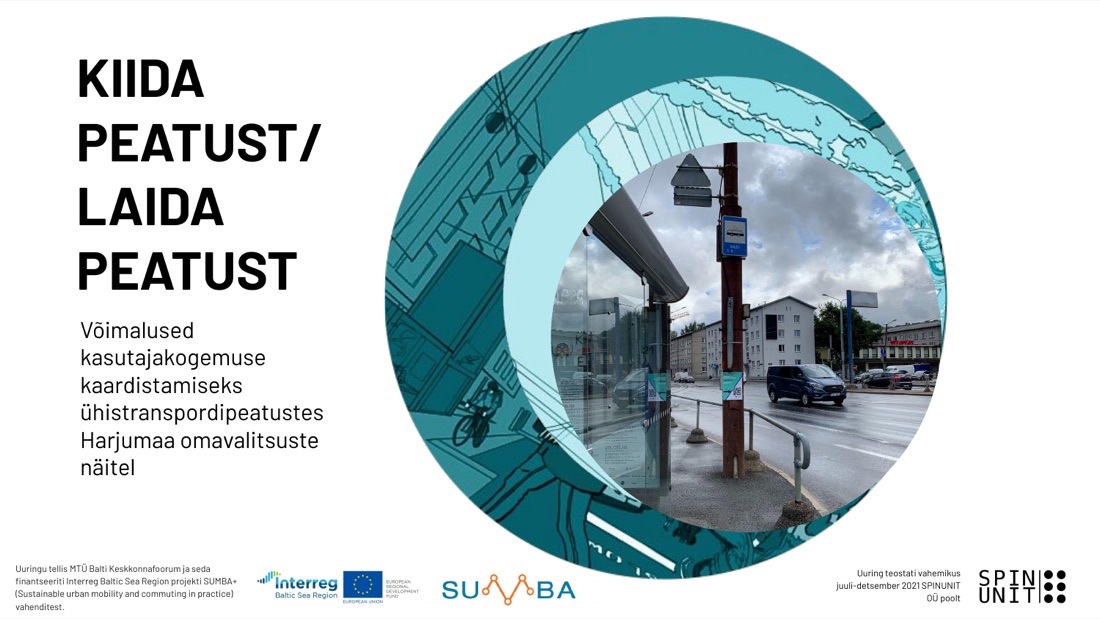
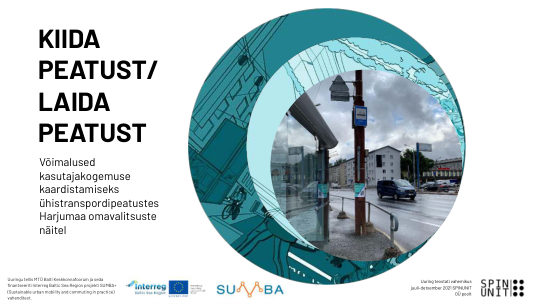
Kiida Peatust / Laida Peatust — Crowdsourced Bus Stop Survey

“Praise the Stop / Slam the Stop” — testing whether a simple QR code at a bus stop can out-perform social media for collecting real, representative feedback on transit stop quality.
Kiida Peatust / Laida Peatust — Crowdsourced Bus Stop Survey

Continuous, low-cost monitoring of public transit stop quality is hard — surveys are expensive and one-off, and social media feedback skews toward whoever’s already paying attention. This project tested a direct alternative: put a QR code on the stop itself.

Builds on SPIN Unit’s earlier “PeatusKOHT” (2020) study, which had defined a stop-typology framework but only recommended, without testing, QR-code-based feedback collection. This project put that recommendation into practice across Tallinn, Harku, and Lääne-Harju.

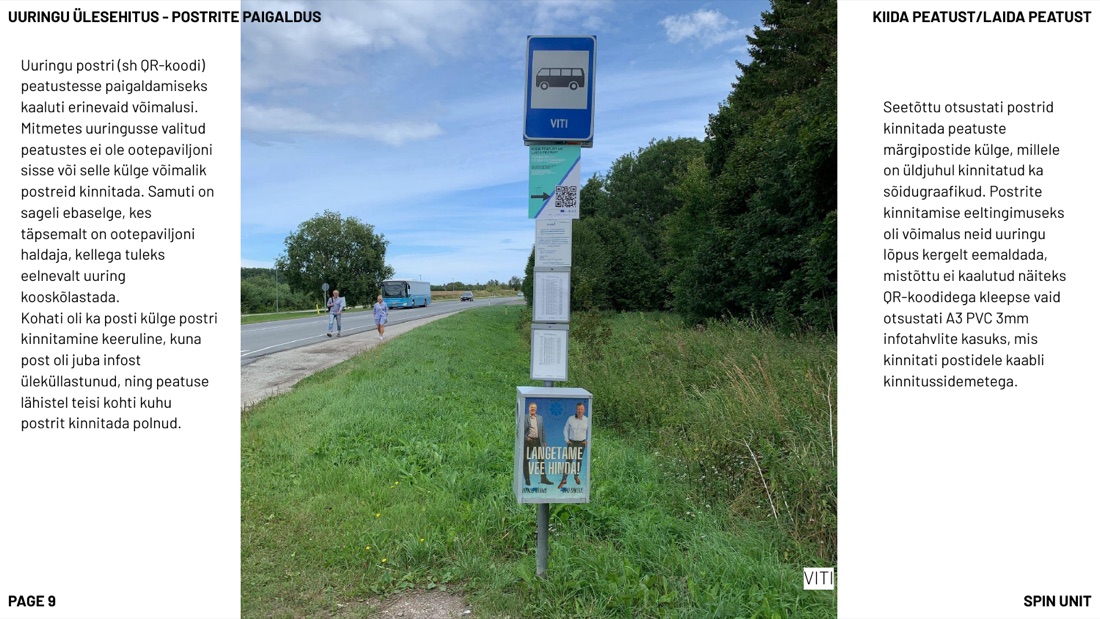
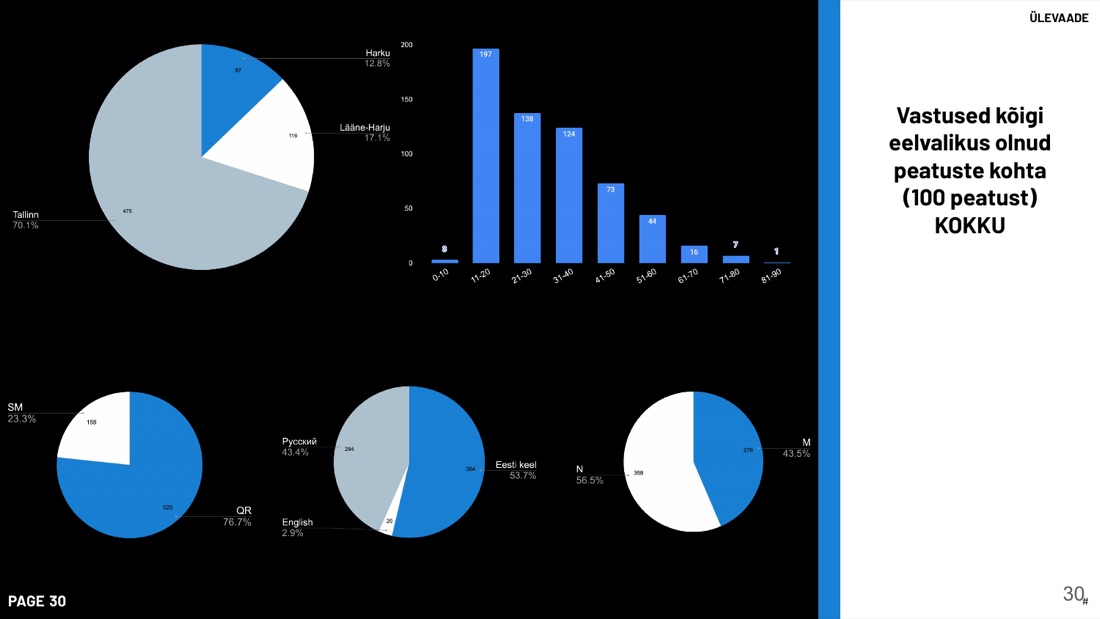
Installed QR-code posters at 100 pre-selected stops (50 Tallinn, 25 Harku, 25 Lääne-Harju), chosen along a key regional transit corridor and to cover the full PeatusKOHT stop-typology range, and ran the same questionnaire in parallel via a generic social-media/web link open to feedback on any stop. 1,097 responses were collected between August and October 2021.

Delivered as a 141-page bilingual report comparing the two collection channels, plus raw response datasets and a mocked-up monitoring dashboard concept for individual stops.
1 report to download
About the project
ClientCity of Tallinn
PlaceHarju County, Estonia
Year2021
LensMobility
TopicsCrowdsourcing, Public Transit, UX Research
What we found
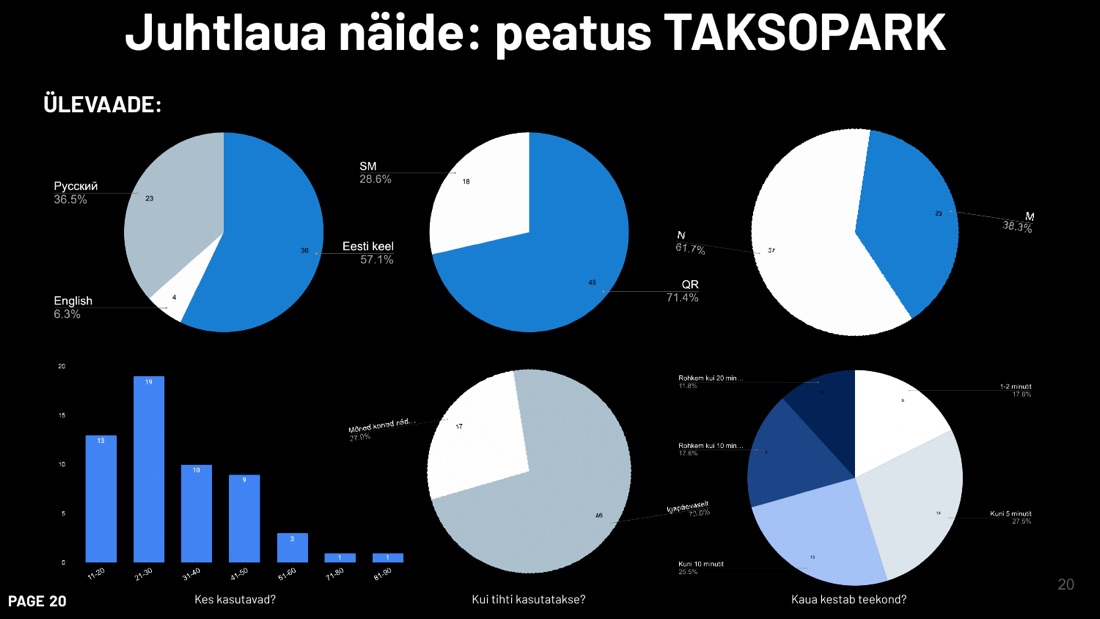
QR-code-at-stop clearly outperformed social media for representative, stop-specific data — the social-media channel reached only about 23% of a given stop’s actual userbase and skewed toward Estonian-speaking women, useful only for the very highest-traffic stops.
QR distribution was specifically the most effective channel for reaching younger users and Russian-speaking respondents — two groups traditional surveys typically struggle to reach.
Lighting is the single biggest safety complaint everywhere in the region, with roughly half of respondents overall feeling stops are unsafe for children to use unsupervised.
Bicycle and scooter parking/charging was the single most requested addition across all three municipalities, ahead of better shelter or real-time information.
Proposed a concrete next step: permanent, individually generated QR codes (not paper stickers) feeding a live monitoring dashboard the transit authority could use on an ongoing basis — an explicit product concept, not just a one-off survey report.
Pictures

More mobility projects

All 61 →
Mobility
Association of Municipalities of Harju County
2021
SPIN Unit · Helsinki — Tallinn
Project record No. 43
Lens:
Mobility
Reports:
5
The New Modal — Mobility Equity in Harju County
SPIN UnitRead the record →
Mobility
Fyma
2021
SPIN Unit · Helsinki — Tallinn
Project record No. 41
Lens:
Mobility
Reports:
1
Mobility KPIs for Queen Elizabeth Olympic Park
SPIN UnitRead the record →
Mobility
City of Tallinn
2020
SPIN Unit · Helsinki — Tallinn
Project record No. 38
Lens:
Mobility
Reports:
5
metaYLE — Ülemiste Mobility Nudge
SPIN UnitRead the record →
Mobility
Demos Helsinki
2020
SPIN Unit · Helsinki — Tallinn
Project record No. 33
Lens:
Mobility
Reports:
—
Riga Mobility Metrics
SPIN UnitRead the record →
Mobility
Self-initiated
2022
SPIN Unit · Helsinki — Tallinn
Project record No. 53
No. 53
Lens:
Mobility
Reports:
—
Footfall scenarios for a Rail Baltica station development
SPIN UnitRead the record →